System Abuse of Jane: parental perspective
Introduction
Jane was a late developer having missed all her early developmental stages. At the age of 5 years she underwent a two day psychological and medical examination at a London Hospital who arrived at a definition of her condition at that time: On the autistic spectrum; having sensory integration disorder; complex learning difficulties (IQ estimated at the time of between 60 and 70); dyspraxia; and minor physical disabilities stemming from a shorter than normal bone in her left arm. Jane, initially dysphasic, developed basic speech around 6 years. Autism was recognised as a lifelong condition and the hospital consultants explained that Jane would probably require a lifetime of support.
At Primary School she was provided with an excellent teaching assistant and the experience was very positive. Her mainstream secondary school experience was mostly positive since she was supported within a Special Educational Needs Unit and a teaching assistant. However, in her final year school it became apparent that something was seriously wrong. The first signs of playground bullying were a deterioration in her behaviour and an increase in meltdowns. Slowly she began to tell us about online abuse and ‘bad’ phone calls. We intercepted one such phone call where the caller went into detail about the damage he intended to inflict on Jane’s body both physically and sexually and repeated over and over and over that she shouldn’t have been born and that she should kill herself. The police treated the matter as ‘Hate Crime’ and were able to trace the call. The perpetrator was later sent to prison for abuse and physical assault. Jane was moved to a special needs facility within the Local Authority, which offered a safer environment.
Henshaws Society for Blind People Residential Care Home
When Jane was 18, we believed her quality of life would be improved if she was more independent. Bradford CC Social Services were unable to provide supported accommodation in Ilkley, the local community where she grew up, and could only offer an ‘out of area’ residential care home with 24/7 support. The reason given was that housing in Ilkley was too expensive and funding wasn’t available. Jane’s Bradford CC Social Worker Ms Good selected a North Yorkshire care home situated in Harrogate run by Henshaws Society for Blind People where ‘service users’ were supported by ‘service providers’ (Henshaw’s terms). With Ms Good and Jane we visited the Home where five blind people with learning disability lived in a four storied Edwardian house. The facilities were good and information sheets and publicity material impressive. Jane, a stickler for cleanliness, particularly liked the new bathrooms and noticed that the baths had been removed and replaced by showers. Aware that abuse of people with autism and learning disabilities increased when a placement was ‘out of area’ we and Ms Good, asked questions which were answered to our satisfaction unaware that the Home’s Manager, Mrs Badenden, had lied to us. Our two key questions were about (1) training of staff – only later did we find out that staff were only trained in visual impairment and learning disability – there was no autism training and no person in the Care Home with in-depth understanding as required by UK law (2) “Why has a place become vacant for Jane”? We were told “Because a service user, a woman, had moved to supported living”. Not true we found out later. A service user with learning disability and epilepsy had drowned in a bath. Even though in the year running up to his death the number and severity of his seizures had increased he had been allowed to have a bath alone behind a locked door and left untended for 20 minutes. (people with epilepsy have a 15–19 times greater risk of drowning than the general population). They lied and we were too trusting.
Jane moved to Henshaws Residential Care Home in 2015. Her key worker was excellent, and Jane soon established good relationships with ‘service providers’ and ‘service users’.
However, in 2016 Jane stated, Nigel’s weird’. Nigel was a ‘service provider’ (a care worker) at the Care Home.
A few weeks later Jane repeated “Nigel’s weird”. Then she began to interrupt conversations with “Nigel’s weird”. Increasingly, over the coming months, “Nigel’s weird” was dropped into discussions on unrelated topics. This was her ‘red flag’, her way of telling us that Nigel was treating her badly, and we missed it. Our neurotypical brains thought ‘He’s a 40+ bachelor, wears a yellow T-shirt, red tracksuit bottoms, bicycle clips, and long hippie hair, but that’s hardly weird’. Our mistake again.
Late in 2016 Jane stated to Ms Good: ”I want to leave” (Henshaw’s Residential Care Home). She began to stutter, stimmed, gain weight, and her self- esteem plummeted. In her desperation to be heard her behaviour became more extreme and she shouted, “My autism is attacking me.”
People on the Spectrum can struggle when it comes to relationships and understanding people. That makes them vulnerable to abuse in some circumstances such as living in an out of area Residential Care Home. Jane, like many on the Spectrum, processes information slowly and will sometimes answer a question days later. But when she said, “Nigel’s is weird. He makes me sad”, and we asked her “How?” She responded quickly. Her initial cryptic disclosures of abuse had turned to concrete examples. Nigel had yelled, insulted, mocked, intimidated, publicly humiliated, belittled, teased, isolated, and excluded her. He made jokes about her autistic behaviour, was sarcastic, treated her like a baby, and slammed and banged his impatience and anger at her. His treatment of Jane was dehumanising. He often played with the top of Jane’s head which caused her to scream in pain (due hypersensitivity to touch as a result of sensory integration problems) – this was solely for the entertainment of ‘service users’ who laughed and laughed at Jane’s expense.
All we wanted was for the emotional/psychological abuse to stop so that Jane’s precarious mental health could be stabilised. We did not seek confrontation or to establish an adversarial relationship with Henshaws so in 2016 we asked for an informal meeting with the Home’s Manager Mrs Baden to explain the problems caused by Nigel’s behaviour. She said she would talk to him. Since Nigel’s actions demonstrated a lack of understanding of autism, we offered her National Autistic Society’s educational material and said we were willing to pay for him to attend an NAS introductory workshop on autism – both were refused. Looking back, we should have moved Jane.
After our meeting with Mrs Baden Nigel told Jane ”Nobody’s going to believe you” and the abuse increased. He gave Jane ‘the silent treatment’ and refused to communicate or acknowledge her existence. If there were other staff on duty Nigel would take Jane into the office, close the door and give her ‘the silent treatment’. For those on the spectrum this type of behaviour can damage their mental health since they begin to question, as Jane did, ‘do I exist?’, ‘am I invisible?’. Then we witnessed Nigel abusing Jane. Reluctantly, late in 2016, we made a formal complaint to Mrs Badenden, and she filled in a form and sent it to Ms Melon, Team Leader North Yorkshire CC Social Services Safeguarding. Ms Melon informed us her team would investigate the case and report back. We went on short holiday with Jane to provide her with respite. She felt safe with us and her sister and subsequently provided more examples of the abuser’s behaviour. It was horrendous.
Systemic Failure of North Yorkshire CC Health & Adult Services
Abuse is abuse. It’s damaging and should be prevented or stopped. The systemic failure of NYCC Health & Adult Services constituted systemic abuse. Abusers continue to abuse until they are stopped. If the culture of NYCC Health & Adult Services is not changed it will happen again and other disabled young people will continue to be damaged. This is true for all Local Authorities.
The systemic failings of NYCC Health and Adult Services enabled the abuser, with the knowledge and encouragement of Henshaws Management, to continue his abuse of Jane which significantly damaged her mental health. Weaknesses in NYCC Safeguarding policy, procedure, and practices, are reminiscent of ongoing failings of social welfare in the UK and have been apparent over many decades. Here we will give six examples of factors contributing to systemic abuse in this case but bear in mind these represent just the tip of the iceberg.
(1) ‘Power differential’ is a key factor in abuse. Those with power can and do abuse the most vulnerable in society e.g. children, older people, and those with disabilities and/or autism. NYCC Health & Adult Services must be aware of this important factor given the case of historical abuse of many pupils at Ampleforth College which is situated in North Yorkshire i.e. on their doorstep. Complaints by students began in 1992 but after police and social service investigations were blocked by monks an independent inquiry (2015) was established and its findings were shocking:
Professor Alexis Jay, Chair of the Inquiry, said: “For decades Ampleforth College in North Yorkshire. . . tried to avoid giving any information about child sexual abuse to police and social services. The Catholic Church “prioritised monks and their own reputations over the protection of children”, and “attempted to cover up the allegations”
Henshaws is one of the largest and most powerful charities in the north of England supporting people living with sight loss and a range of other disabilities. They are major employers and make a significant economic contribution to Harrogate. In the context of a decade of cuts in social welfare based on our experience, Henshaws prioritise their reputation and economic well-being over complaints or allegations of abuse. We believe that NYCC Health and Adult Services pay obsequious deference to Henshaws such that in any complaint all Henshaws and NYCC Health and Adult Services personnel from day one were on one side of the table and the abused disabled person is on the other both figuratively (as we will show later) and metaphorically.
(2) Lack of transparency and lack of evidence-based decision making, was practised continuously throughout the six months of the safeguarding process. The key perpetrators were Henshaws management and NYCC Health & Adult Services. It felt like being abused three times – once by Nigel, a second time by Henshaws management, and a third time by NYCC Safeguarding. We were unable to stop it happening.
For example: We were aware that our complaint had been passed by Henshaws to Ms Melon in NYCC Social Services Safeguarding. Ms Melon informed us her team would investigate the case and report back to us. Then silence. The gatekeepers used an internal gatekeeping process which went ahead without us knowing. Unknown to us Ms Melon closed the safeguarding process in 2016. Unknown to us she had a very brief phone call to Mr Bigen, Director of Housing and Support at Henshaws, and then closed the case. Mr Morton the Local CQC Ombudsman investigating the case later asked:
Q: What contact did the Council have with Jane and her parents before closing the safeguarding process?
A: There was no contact with Jane or her parents before closing the safeguarding process (NYCC Health & Adult Services).
We did not know NYCC had closed the safeguarding process until 2017. At every stage of the safeguarding process we, Jane and her parents, were kept in the dark. We were not informed that Mrs Melon had buck passed and asked Henshaws to carry out an investigation. Throughout the process we, the parents, were excluded and not interviewed which, given our background and key witnesses’ status having observed the abuse of Jane, was unprofessional and a basic failure in NYCC safeguarding process.
The single most important point arising from thirty years of government reports and research into abuse scandals in Residential Care Homes is ‘Listen to the disabled person and their family’. Why did NYCC not head this critical point? The second most important point (many researchers place this first) is that to adopt the attitude that “it can’t happen here” is the greatest impediment to adequately protecting residential clients from abuse (Bloom, 1992).
Why wasn’t our complaint, not for a briefest moment, considered worthy of investigation? We posed this question to researchers at Leeds University, Centre for Disability Studies. Dr Hollomotz suggested that from her research that Social Workers did not recognise psychological or emotional abuse as abuse – ‘it’s not real abuse’, ‘real abuse’ being physical or sexual abuse. It’s something to be resolved over a cup of tea.
Research has consistently demonstrated that psychological and emotional abuse takes away that person’s dignity and self-worth and leads to mental health problems. There is significantly higher risk of people with Autism and Asperger Syndrome developing mental health problems i.e. mental ill health compared to the predominant neurotype i.e. ‘normal’ people, (Beardon and Worton, Aspies on Mental Health, 2011). The investigating officer Ms Melon showed no awareness of this widely known and accepted body of research and consequently did never took this case seriously or gave it the time and energy it required. This demonstrated a significant disregard for Jane’s ongoing mental health and safety, as a result of abuse after she disclosed.
(3) Groupthink: Groupthink is a dynamic that can lead to bad decisions; it is a phenomenon in which a group of individuals, in this case Henshaws Management and NYCC Safeguarding, consider themselves infallible (see Janis, 1982).
Whatever the reason for not considering the evidence and closing the safeguarding process after a brief conversation with Mr Bigen, Director of Housing and Support at Henshaws, it became evident that groupthink was operating across the two organisations. Henshaws and NYCC Safeguarding, totally excluded the possibility of abuse having taken place with an ‘abuse can’t happen here’ mindset. At no time did members of these organisations question their beliefs or consider the potential consequences of their actions – e.g. that the abuser was an abuser and would continue to abuse unless stopped. It makes members blindly overconfident. Hence, when Mrs Baden, at a meeting in January 2014, accused Jane of making racist remarks, implied she was watching porn in her room and made ‘disgusting’ remarks in front of staff and finally screamed “You’re lying” (about the abuse she had suffered for 11 months) at Jane leaving here quivering and near tears in the corner of the room. Mrs Baden’s appalling behaviour was not questioned by Ms Good, Bradford CC social worker, or Ms Harris, Henshaws a safeguarding officer, who were present.
Stereotyping of contrary viewpoints led members of the group to reject all perspectives that question or challenge the group’s ideas. For example, ‘Jane’s lying‘, ‘the parents are the problem‘, and ‘Jane’s not autistic‘ were, we were told, unquestionable facts.
The ‘Mindguards’, Mr Bigen and Ms Melon, preventing troubling or contrarian viewpoints from circulating among car home group members. Consequently, rather than sharing important information, team members may have kept quiet and not shared their concerns.
The ‘Mindguards’ made their decision to close the investigation after a 5-minute telephone conversation and without collecting evidence from key witnesses and independent experts with an in-depth understanding of autism, hence the enquiry did not undergo due diligence. Mr Horton the Local Ombudsman investigating the case said this was a mistake.
Direct pressure effectively silenced any group members who posed inconvenient questions or raise objections that may be seen as evidence of disloyalty. Potential group members must show loyalty before they are allowed to join the group. Jane’s Bradford CC social worker, Ms Good for example was told by Ms Melon that Mr Bigen was “one of the most respected Care Managers in the UK and placed him high on a pedestal of esteem that could not be questioned”. To join her fellow social workers Ms Good had to acquiesce, even though prior to this case she had never met Mr Bigen or even heard his name. Groupthink shaped and fixed the mindset of the group who ignored suggestions of anyone outside the group. With groupthink in place abuse will have taken place in the past, is taking place now, and will take place in the future. Only the introduction of a body of critical, independent, and reflexive thinkers, can this sad scenario end. On second thoughts removal the abused person to a place of safety asap, would have worked.
(4) The continued abuse and Isolation of Jane
Social isolation of the victim of abuse by the abuser is a very common factor in abuse cases.
Nigel encouraged the ‘service users’, to hold a party late in 2016, without Jane being present, to celebrate Jane going away on holiday. This was condoned by the Care Home Manager. It was the beginning of multiple attempts over a five-month period by Nigel, the abuser, to socially isolate Jane. He could only do this because he was allowed repeat access to her from beginning to end.
We had agreed with the Care Home Manager, Mrs Baden, that we (Jane and parents) would (1) not discuss Jane’s complaint with any person in the Care Home so as not to contaminate evidence and (2) Nigel, the accused, was not allowed to go near Jane, including where she lived, worked, and commonly frequented. This action was needed to protect Jane from further potential abuse and to ensure the accused was unable to interfere with the data collection phase of the investigation (and besides Jane refused to return to the Care Home if he was there). Henshaws did not follow these agreed protocols.

Mrs Baden encouraged the abuser Nigel, to visit the Care Home, to talk to staff at the Care Home, to talk on the phone and talk to other staff at other Henshaws Care Homes, to visit Jane’s place of work and communicate with other ‘service users’ at her Care Home. In one week in December he visited, actually he was invited by Mrs Baden, to visit Jane’s Care Home on three occasions.
Jane’s safe haven was her bedroom, where every object has a defined place, and a particular brand of air freshener marks her territory. The belief in her bedroom, situated at the top of the house next to the staff quarters, as a sanctuary was shattered by Nigel’s close proximity. The walls of her sanctuary became thinner late 2016 when the accused put an angry note under her door at night (using basic semiotic analysis and by adopting the perspective of an autistic person i.e. Jane’s perspective the message was clearly angry). This scared her since each and every situation to Jane is unique and even the slightest changes in her environment or routine may confuse and upset her. She crept quietly up to her bedroom one night when the other service users were enthusiastically discussing the abusers return to the Care Home on 18th January 2018 (Nigel was especially friendly with service users whilst distanced himself from Jane). During a power cut that evening early in January 2018 Jane thought he was coming for her. ‘He’s coming to get me she thought’. She stimmed, flapping and rocking and holding her hands over her ears to drown out the silence, and to counteract the overwhelming sensory environment that was blackness and alleviate the high levels of internal anxiety. She sat on the end of her bed crying in the dark, the door locked. Then feeling alone and very scared, she began to scream. Only parents of autistic people will know and understand the spine-chilling primeval sound of an autistic scream. It means, quite simply, ‘I’m in pain’. No young person, especially a disabled young person, should be made to feel so abandoned. Jane was literally and emotionally, in a very dark place. She was communicating her extreme pain and NYCC Safeguarding should have consulted an expert in autism or us in under to understand the meaning and significance of her way of communicating deep distress.
Following this particularly harrowing meltdown late one night in January 2017 our anxiety for her mental health was a heightened. We hurriedly composed a discussion paper (sent to Ms Good, Jane’s Bradford social worker) for the meeting on the issues we wanted to discuss. We met Ms Harris (Henshaws Management Safeguarding), and exchanged information but essentially, we interviewed her rather than she interviewed us. We wanted the abuse of Jane to stop.
This was the first and only meeting that we felt a Henshaws manager took into account ‘No Secrets’ guidance which requires that any assessment of a safeguarding situation should “account for the depth and conviction of the feelings of the person alleging the abuse” (2.20).
Ms Harris appeared shocked and we left the meeting with and undertaking from her:
With regards to Jane’s welfare and safety, I have spoken to Nigel (the accused) regarding the Safeguarding investigation and his redeployment. A very clear message has been given that under no circumstances whilst this investigation is proceeding must he visit, contact or telephone Jane, or any of the other Service Users and Staff at Janes Care Home, nor must he visit or contact the Arts & Crafts Centre.
Likewise, I have also had a conversation to ensure he refrains from discussing the investigation with work colleagues / staff members in other locations. (Mrs Harris, email January 2017).
The abuser Nigel ignored Mrs Harris. Three staff at the Care Home told us, he continued to contact the Residential Care Home. We asked Mr Bigen to stop him and he said he would. The abuser ignored him and staff told us he continued to contact the house proclaiming his innocence and that he would return. The accused was sent on holiday and ‘sick leave’ for two weeks and came back and resumed contacting the house. He continued to contact Jane’s Residential Care Home and speak to staff to explain that he was not guilty and that it was Jane’s fault until the day she left. He also continued to tell staff at other Care Homes and other Henshaws care workers that he was not guilty and would be returning to Jane’s home on 12th February 2017. This open hostility scared Jane further.
There is clear evidence that Henshaws have not followed or enforced the agreed protocol to protect our daughter from the person psychologically/emotionally abusing her. This failure led to the potential contamination of evidence being collected by the internal investigation and the isolation by service users and staff of Jane since Nigel was constantly telling them “She’s (Jane) a liar don’t talk to her”, from November 2015 until Jane left the Care Home in March 2017. He even phoned the Care Home on the day she left as we loaded her suitcase into the car. His objective was to isolation and to force her out the Care Home. He succeeded with the help of NYCC Safeguarding and Henshaw’s Management. There is a well know saying in universities which applies to all institutions – “The Professor abuses his secretary, it’s the secretary who leaves”.
(5) NYCC Safeguarding Strategy Meeting 11th February 2017
We assumed that NYCC safeguarding would, prior to the Strategy Meeting, collect evidence in order to fully understand and resolve the problem. Since neither we nor Jane were interviewed by NYCC Safeguarding and there were no plans to collect evidence from us prior to the meeting we hurriedly complied a 66 page document outlining our evidence and sent it to Ms Melon.
Prior to the Strategy Meeting on February 11th 2017 three issues arose. The first was the agenda for the Meeting was a generic 15-point list and we were told the meeting would take one hour. We suggested an agenda focused explicitly on Jane and her needs and required two hours for discussion. This was declined. The second issue was who would represent Jane at the meeting. Jane was adamant that we would. However, Ms Melon wanted either Jane’s social worker, Ms Good, to represent her to which, although Jane liked her, we objected on the basis she did not know Jane well enough (3 hours contact in 3 years is not enough), or an Advocate of NYCC Safeguarding’s choosing. Jane did not like meeting new people she did not know, and we thought ‘parachuting’ a stranger who did not know Jane at this late stage was not logical. The third issue surprised us. Ms Melon said only issues arising from the second alert (which we never saw) i.e. from 11th January 2106 were to be discussed. We suggested that in order to understand and solve the problem the whole problem needed to be discussed (Jane had alerted us to the abuse in April 2015 but it probably pre-existed that date). Although this was accepted, we realised that NYCC Safeguarding were again failing to recognise or accept that the abuse was conducted over an 11 month period and had caused considerable distress to Jane and had affected her well-being and undermined her mental health:
The definition of abuse in use at the time of these events was contained in the ‘No Secrets’ guidance (which was statutory guidance under s.7 LASSA 1970). That definition included: “psychological abuse, including emotional abuse, threats of harm or abandonment, deprivation of contact, humiliation, blaming, controlling, intimidation, coercion, harassment, verbal abuse, isolation or withdrawal from services or supportive networks;” (2.7) and “Neglect and poor professional practice also need to be taken into account. This may take the form of isolated incidents of poor or unsatisfactory professional practice, at one end of the spectrum, through to pervasive ill treatment or gross misconduct at the other. Repeated instances of poor care may be an indication of more serious problems and this is sometimes referred to as institutional abuse.” (2.9)
We arrived at the arranged meeting place 30 minutes early and were asked to wait next to the main entrance. No-one passed us. Then we were ushered into the meeting room and sat one side of a huge committee table. Then in came an entourage of seven people which included, Ms Melon, two social workers from Bradford CC Social Welfare, the committee Chair, and a secretary who would take minutes, and ‘David’ a NYCC Social Worker. Missing was the NY CQC officer Mr Baden who Ms Melon said she would be there to answer our questions about lack of autism training and no record of training in safeguarding people with epilepsy etc and we were told she had a more pressing engagement. Mr Baden retired soon after the meeting. The group of seven sat the other side of the table – It was clear that the Strategy Meeting had already taken place and decisions had already been taken. We were there to hear their findings. This meeting resembled the infamous Social Worker Conference Meetings of the 1980s.
Again, NYCC Safeguarding were demonstrating their ignorance of autism. The long rectangular committee table was lit by bright fluorescent lighting, with one light flickering throughout. The seating was adversarial with our autistic daughter with learning disability and sensory integration disorder sitting between us and a row of seven strangers staring at her on the other side. The room echoed and the lights hummed and the Chair wore a very strong perfume.
Ms Melon showed no understanding of sensory modulation, sensory discrimination and sensory-based motor disorders, and no link between sensory difficulties caused by such an environment and distressed behaviour was made. Was there no-one in North Yorkshire Safeguarding who was aware that to Jane certain sounds, sights, smells, textures, and tastes can create a feeling of “sensory overload.” They showed no awareness that bright or flickering lights, loud noises, certain textures of food, and scratchy clothing are just some of the triggers that can make her feel overwhelmed and upset.
From the start it was clear that Ms Melon wanted Jane present so that she, and her team, could probe her and confuse her. Jane wanted to attend because she was determined to put her views across – she wanted to be listened to. She said she wanted to read out her page of evidence to the meeting but that she didn’t want to answer questions from strangers. Her statement was not recorded in the draft copy of the minutes which was disappointing. The secretary later explained that she could only include what she was allowed to by the Chair.
The Chair opened meeting and started to ask Jane questions. Jane was very upset, it was difficult for her to be there, and she was finding it stressful but manageable if she didn’t have eye contact and didn’t have to answer questions. She began to shake as the Chair asked another question and we intervened and said “Jane said ‘no questions”, as agreed prior to the meeting”.
Next Ms Baden and Ms Melon, in a probably preplanned strategy, pressured Jane into accepting an Advocate appointed by them to replace us. Jane said “No”. Social workers are representatives of the UK Government and very powerful. That power should be used with due care and not merely to drown out alternative voices.
The meeting was adversarial from the start and the Chair began with the statement ‘We are only going to discuss events concerned with the second alert. We objected and it was eventually agreed to discuss the whole case not part of it. The 1 hour 45-minute discussion was unhelpful since Ms Melon was unresponsive and unable to discuss the evidence in our 66-page document. Moreover, as the meeting progressed, she became increasingly rude, laughing and sniggering her objections to our statements. The lack of professionalism was shocking.
Near the end of the meeting Ms Melon looked at the spare copies of our 66-page evidential document and said ‘You’ve spelt Jane’s Name wrong – it’s ‘Jones and you’ve written ‘Potter’. Ms Gooden, Jane’s Bradford social worker, pointed that the names had been changed on the cover and throughout the document for reasons of confidentiality. Clearly Ms Melon had never bothered to read the document which explained why she was unable to talk about its contents. Later Ms Gooden confessed she was surprised and disappointed. A process which does not consider relevant evidence provided to it is fundamentally both flawed and unfair. We never received NYCC Safeguarding’s report.
Jane left the Residential Care Home on 1st March 2017 and returned home to Ilkley in West Yorkshire. Our mistake. She shouldn’t have gone there in the first place.
(6) Ignorance of Autism
At the heart of the problem is NYCC Safeguarding’s inadequate understanding of autism and the assumption that adults with autism who also have a learning disability can access services that meet their needs. Some adults with autism and an accompanying learning disability are entirely reliant on their parents for support, and for those who can access services, these often do not take account of their autism. Almost half (47%) of parents and carers of adults with autism who have an accompanying learning disability say that a lack of understanding of autism has been a barrier to their son or daughter receiving support. (I Exist, National Autistic Society, 2008). A survey of Local Authorities found:
It is . . . of concern that local authorities do not think that care managers receive sufficient training in autism in their initial professional training (71%) and in their ongoing professional training (67%). Over three quarters (76%) of local authorities do not have an autism training strategy at all. (I Exist Survey, National Autistic Society, 2008).
Despite changes in the law and statutory obligations, the problem of ignorance of autism still exists and clearly exists in NYCC Safeguarding. Without understanding of autism as a starting point, the support and services required by people with this disability cannot even begin to be fully anticipated or developed according to individual need. It is sometimes the case that the local authority itself has contributed to cases of abuse and neglect for failing to adequately fulfil its statutory obligations. The ombudsmen have been duly scathing in several cases relating to young people with autism whom local authorities have refused to adequately provide support for. NYCC Safeguarding should adopt Nolan’s (2001) ‘Seven Principles of Public Life’ or shape judgements based on the question “What/how would you act if this were your child?”
Legal Action
We recognised that there wasn’t going to be a Protection Plan for Jane and that Nigel would continue to abuse her. The National Autistic Society advised that we consider a civil legal case to protect Jane and to protect others in the future. They named an expert in UK law as it pertained to autistic and learning-disabled adults of international standing. We approached the consultant and provided documentary and visual evidence. The consultant was critical of the Ombudsman’s report even though he found in our favour and fined NYCC. The legal consultant stated: The Ombudsman’s draft report does not appear to consider whether NYCC made reasonable adjustments under the Equality Act 2010 to the safeguarding investigation process. The consultant went on to make five pages of legal observations, for example:
Jane is autistic. This is accepted by all parties and mentioned in every document and report. However it appears that no consideration has been given to the following issues:
- whether NYCC and Henshaws have complied with statutory requirements with regard to autism specific training of staff and the potential impact of this;
- whether NYCC and Henshaws have complied with the Equalities Act in considering and making reasonable adjustments in providing care for Jane and the potential impact of this;
- whether NYCC and Henshaws have complied with the Equalities Act in considering and making reasonable adjustments to their safeguarding and complaints processes and the potential impact of this on the outcomes of those processes;
- whether the Local Government Ombudsman has considered the key issues above which are relevant to the issue of whether there was fault in the way the decision was reached;
- whether the Local Government Ombudsman has accessed adequate autism specific knowledge and experience to be able to come to a fair judgement in this case.
The National Autistic Society provided the names of six legal firms who would provide legal advice on whether to take legal action against NYCC, Henshaws, and Bradford CC. After reading our evidence, the findings of The Ombudsman, our legal consultant paper, the report from Jane’s doctor, and reports from Jane’s clinical psychologists, the first company we approached said a civil case for damages was appropriate and offered a ‘No win no fee’ contract.
Jane moves back to her own community in Ilkley
Jane wanted to leave Henshaws and our patience was exhausted, so we agreed to move her back home to Ilkley where she grew up and was known in the community. In March 2017 Bradford CC claimed, as they did in 2014, that they couldn’t find a care home for Jane in Ilkley, so we found a home and told Bradford CC to pay for it. We also identified support staff with experience of autism who, in addition, agreed to further training which we paid for.
The National Autistic Society encourage the use of person-centred plans in preventing abuse:
We would also like to stress the importance of person-centred plans in preventing abuse. Person-centred planning is a set of approaches which enables a person to plan for their lives, take part in the community, be supported in a way which is meaningful to them and to enable them to keep healthy and safe. The process of developing person-centred plans is about empowering people to lead change themselves, and to speak out when things are not right in their lives. This has obvious benefits for supporting people to stay safe and learn how to advocate for themselves.
(No secrets: safeguarding vulnerable adults, National Autistic Society).
We (Mr and Mrs Jones and Jane) with our new support staff which we helped to appoint, agreed on a Person-centred Plan and to meet every three months to review that plan. This approach was accepted by Bradford CC Social Services.
Mr Ralphy, line manager to Jane’s Bradford social worker Ms Good, also claimed that Bradford Council Safeguarding operated differently to NYCC’s and that Bradford Council would have would have suspended the accused for the duration of the enquiry to protect Jane. Bradford Council were particularly mindful of the need to protect autistic adults following the case of Gareth Oates, a high functioning 18 year old autistic boy from Suffolk who committed suicide in 2012 at Marsden railway station i.e. within Bradford CC’s domain. He had been bullied at secondary school, taunted in College to kill himself, and had threatened suicide prior to his death. The Bradford Coroner said Gareth was failed by several agencies including those dealing with mental health, social services and education. He said: “There was a lamentable lack of a named expert in autism to take overall charge of his care and adopt a holistic approach to his needs.” Ms Melon NYCC safeguarding who had overall responsibility for Jane’s safeguarding needs, the needs of an autistic person, failed to provide a personalised protection plan for Jane to keep her physically and mentally safe.
Jane’s Mental Health
Driving away from Henshaws for the last time Jane asked “You saw what he did to me. Why didn’t you stop him?” We could only say “We’re sorry”. We know that abuse will leave Jane with mental scars long after her physical wounds (self-inflicted during meltdowns caused by punching herself and banging her head against a wall) have healed. We worry about Jane’s future.
Jane’s mental health deteriorated further on leaving Henshaws. Soon after she left North Yorkshire her nightmares about the abuse she’d suffered began. They lasted for three years. She is one of a 350,000 powerless and voiceless people on autistic spectrum in the UK who have been abused (National Autistic Society) and subsequently suffered mental health problems.
Throughout the summer of 2017 Jane experiencing anxiety and her doctor confirmed she was experiencing depression. Bradford CC don’t provide mental health care for autistic people only those with a learning disability. We asked support staff who worked closely with Jane to monitor her behaviour closely. They noticed, as we had, her sadness and crying/puffy eyes and lack of sleep. There is no doubt that being autistic is difficult and that life will never be easy for Jane, but we lacked the experience and knowledge required to move her life in a positive direction.
Her self-worth deteriorated and she shouted, “I’ve had enough of being special needs”. She lost her enthusiasm for life. In October 2017 she said she wanted to end her life. Fortunately, the National Autistic Society provided the name a clinical psychologist with an in-depth knowledge of autism having worked as a specialist in a London Hospital for many years. She diagnosed Jane’s depression as significant and that she suffered from Post Traumatic Stress Disorder, as a result of the traumatic abuse she’d suffered. She formed a close working relationship with Jane and together they built the necessary skills to face and resolve the challenges she faced. Gradually Jane’s anxiety decreased and after six years of consultation the clinical psychologist terminated the therapy deeming Jane ready to face the difficult world.
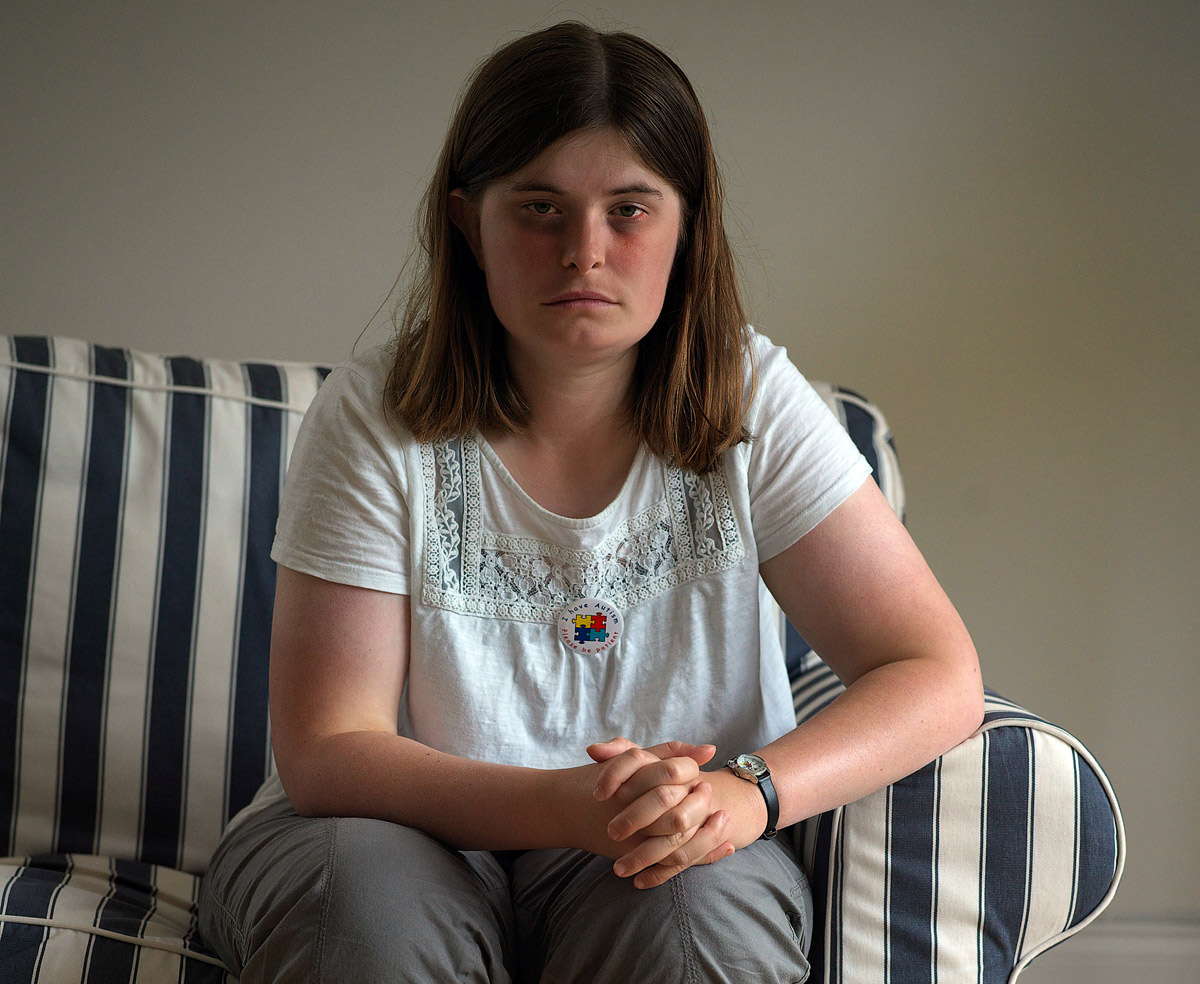
There are numerous cases where residential care homes and supported living have been places of abuse of vulnerable people. With cuts to social care spending local authorities will seek the cheapest not the best/safest option. Often this is many miles away from where they lived with their families. The law says 50 miles is the maximum distance but all to often this is ignored. Research suggests 20 miles is the maximum distance, beyond that the possibility of abuse increasingly takes place. The lesson is: keep your vulnerable loved one as close as possible to the home and community where they grew up.
Mr and Mrs Jones, Jane’s parents. 2023.