Finding people with disabilities and their families who wanted to tell their stories was not easy. I didn’t take the ‘official route’ preferring instead face to face meetings where I could explain the aims of my project to people with disabilities. As shopkeepers in towns, herders in remote valleys, and taxi drivers, came to understand my work and trust me they introduced me to the people who led ‘Different Lives’. Often it was an extended family member or someone in a community who arranged the first tentative meeting. In Anargul’s case it was my taxi driver who had seen me interact with other families and who happened to be married to her older sister.
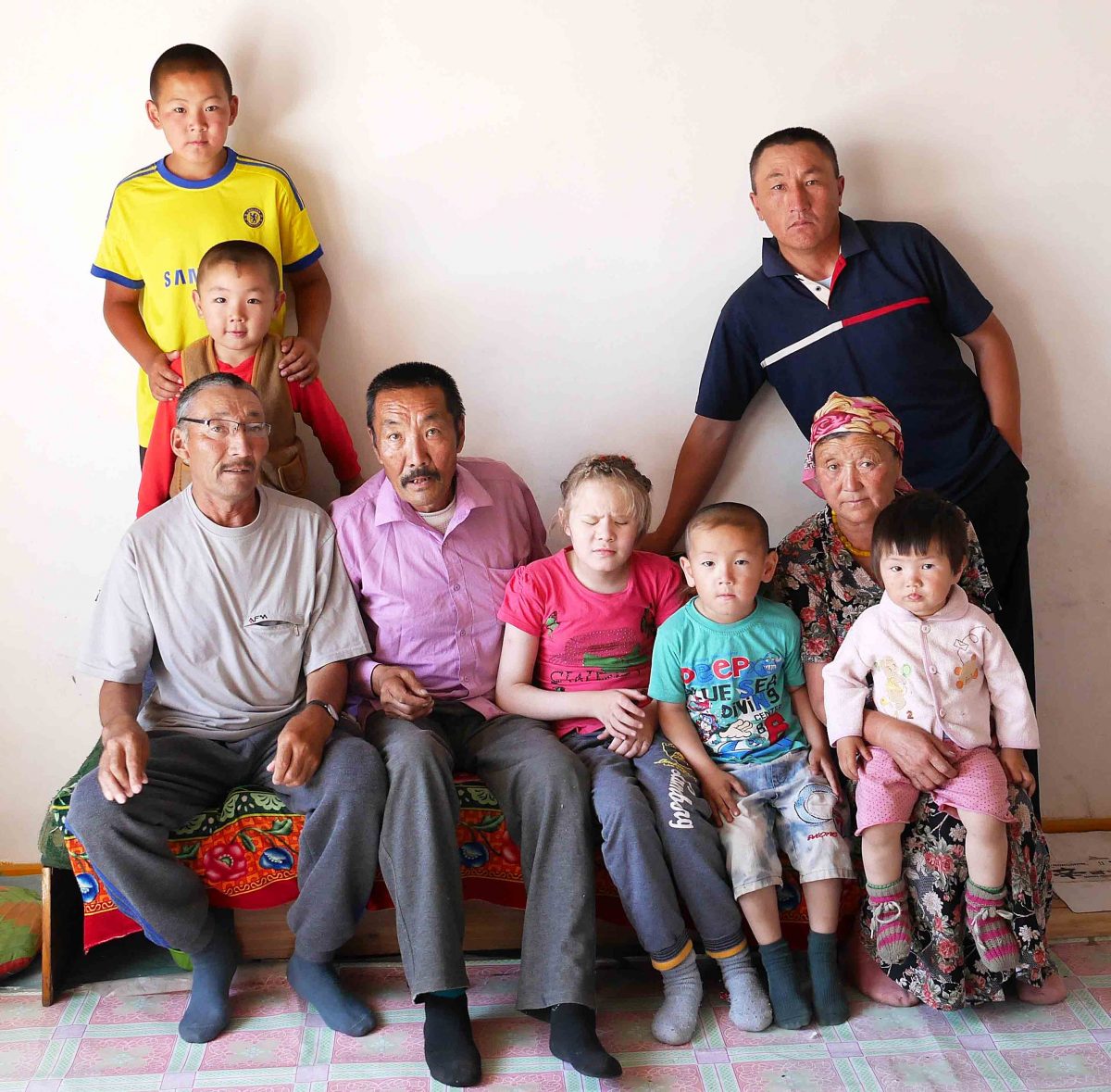
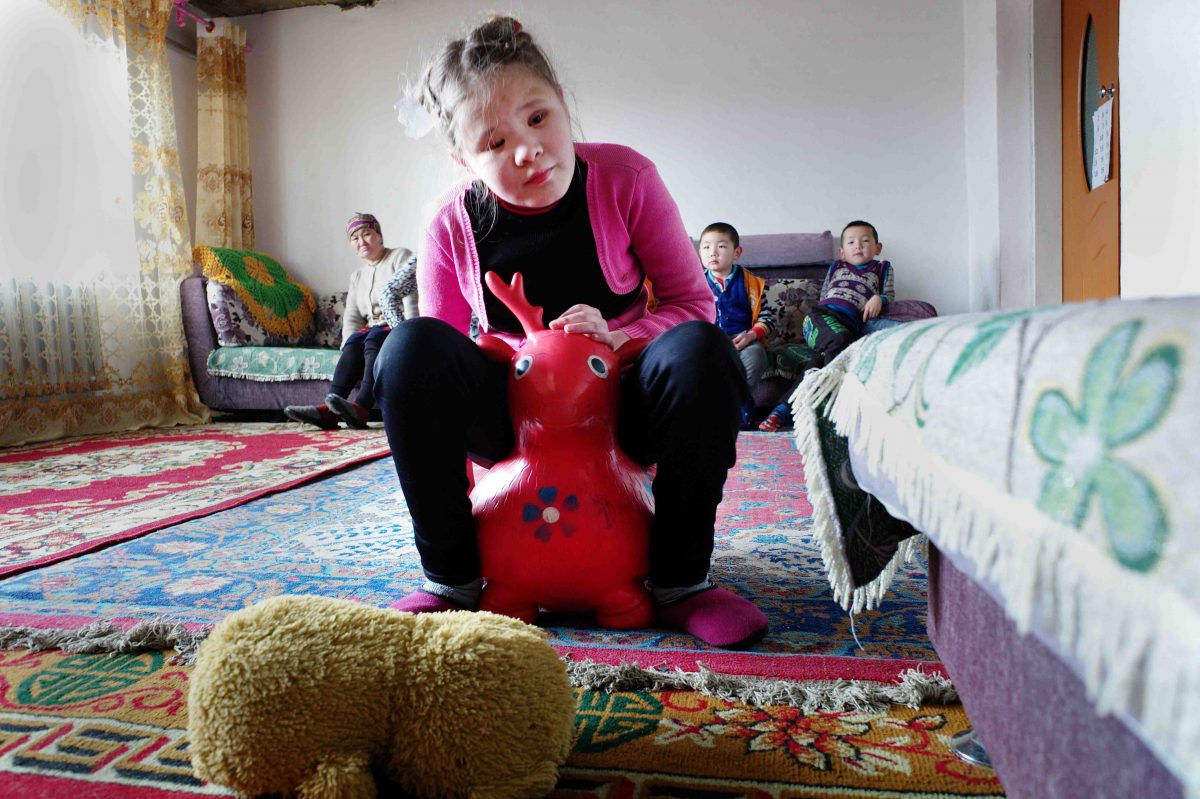
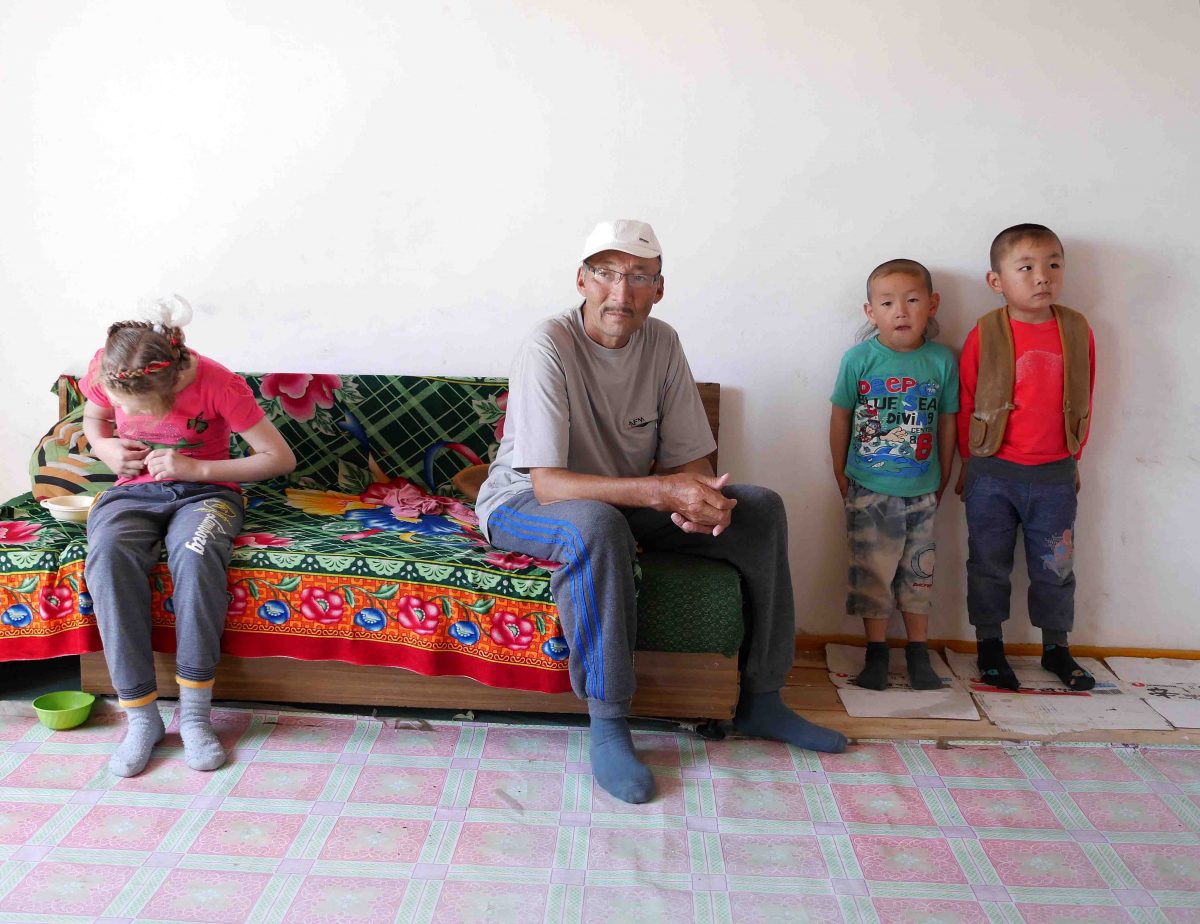
Anargul is fourteen years old and lives with her Kazakh family (five brothers and sisters) in the town of Olgii in Western Mongolia. She was blind from birth, has a significant learning disability, and is probably on the autistic spectrum (diagnosis of autism is in its infancy in Mongolia). Neither Anargul or her family are provided with medical or social support other than a small allowance of £40 per month from central government to pay for subsistence living and medicine.
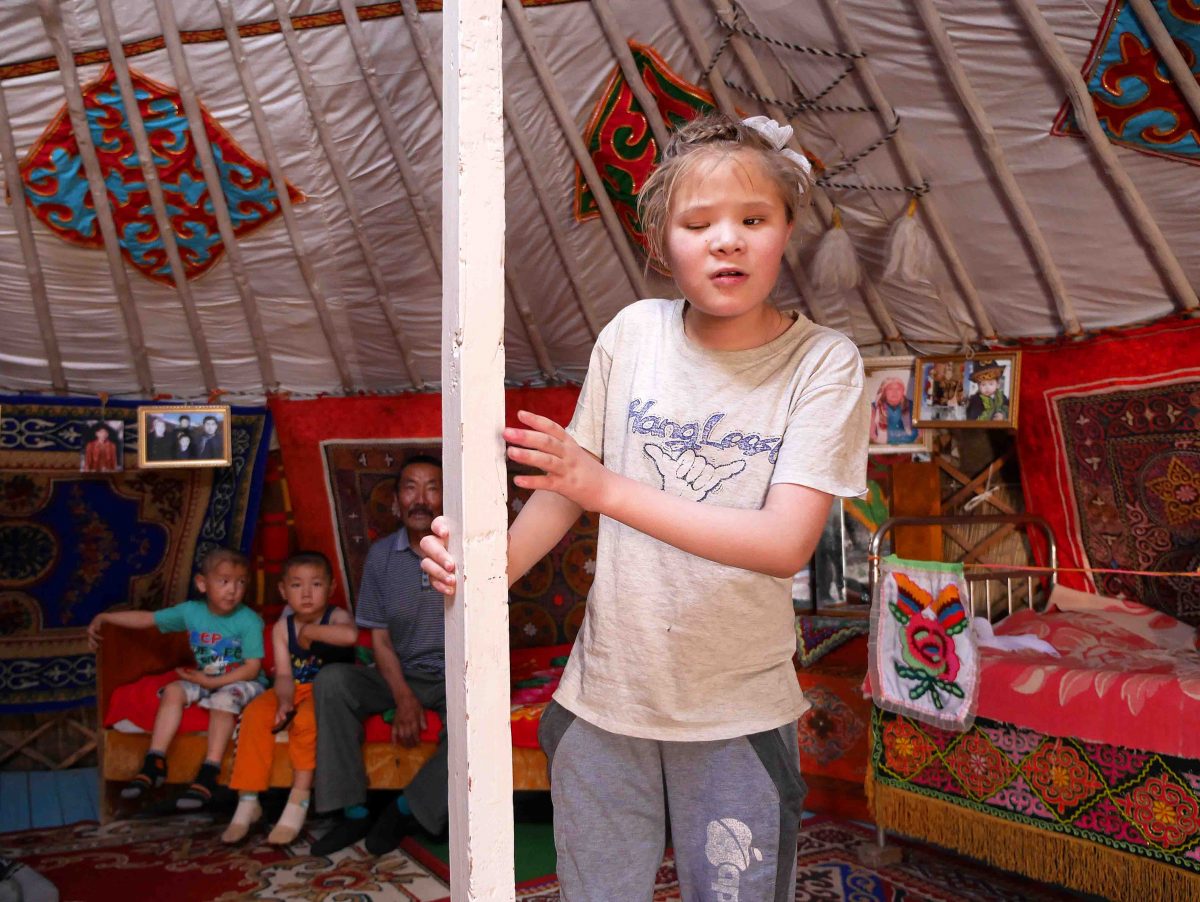
Anargul has difficulty with basic tasks such as feeding herself and communicating with others. She navigates her adobe home and the family Ger outside by touch, listening to instructions from her family, or by simple step counting. She developed social skills slowly, learnt a few words and invented others, and was able to enjoy music on an old tape recorder. Her development slowed and stopped when she was around 6 years old.
One day Sayrankhan (Anargul’s 60 year old mother) opened up to me. She explained “There is little help for people with learning disability in Mongolia. When Anargul was 6 years old family members from the ‘countryside’ suggested we pay for the services of a Shaman to ‘drive out evil spirits’. The Shaman beat Anargul mercilessly with a horse whip for hours.” Like most people on the autistic spectrum with a learning disability the world is a scary place for Anargul and this experience damaged her. Sayrankhan deeply regretted involving the Shaman.
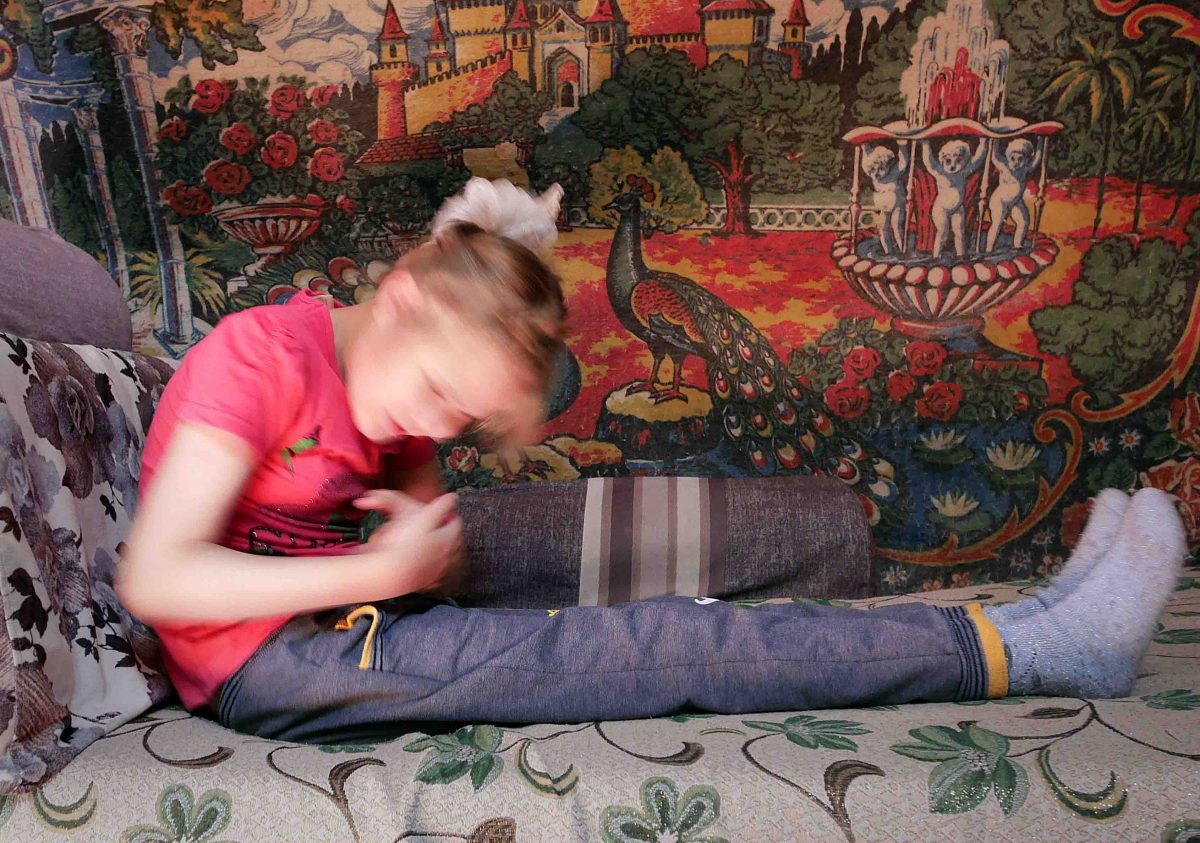
Anargul often stims – hand-flapping, rocking, and spinning – as a comforting mechanism. Some photographs below show her stimming one afternoon. Tactile experience is very important to Anargul.
She is loved and supported by her immediate and extended family. She laughs when the other children laugh and is happy when they are happy. Her father was very close to her but sadly he died suddenly in December 2015. Anargul was distraught and stayed in bed for a week and cried and remains depressed. Her mother is very close to her and is the only person who can touch her head.
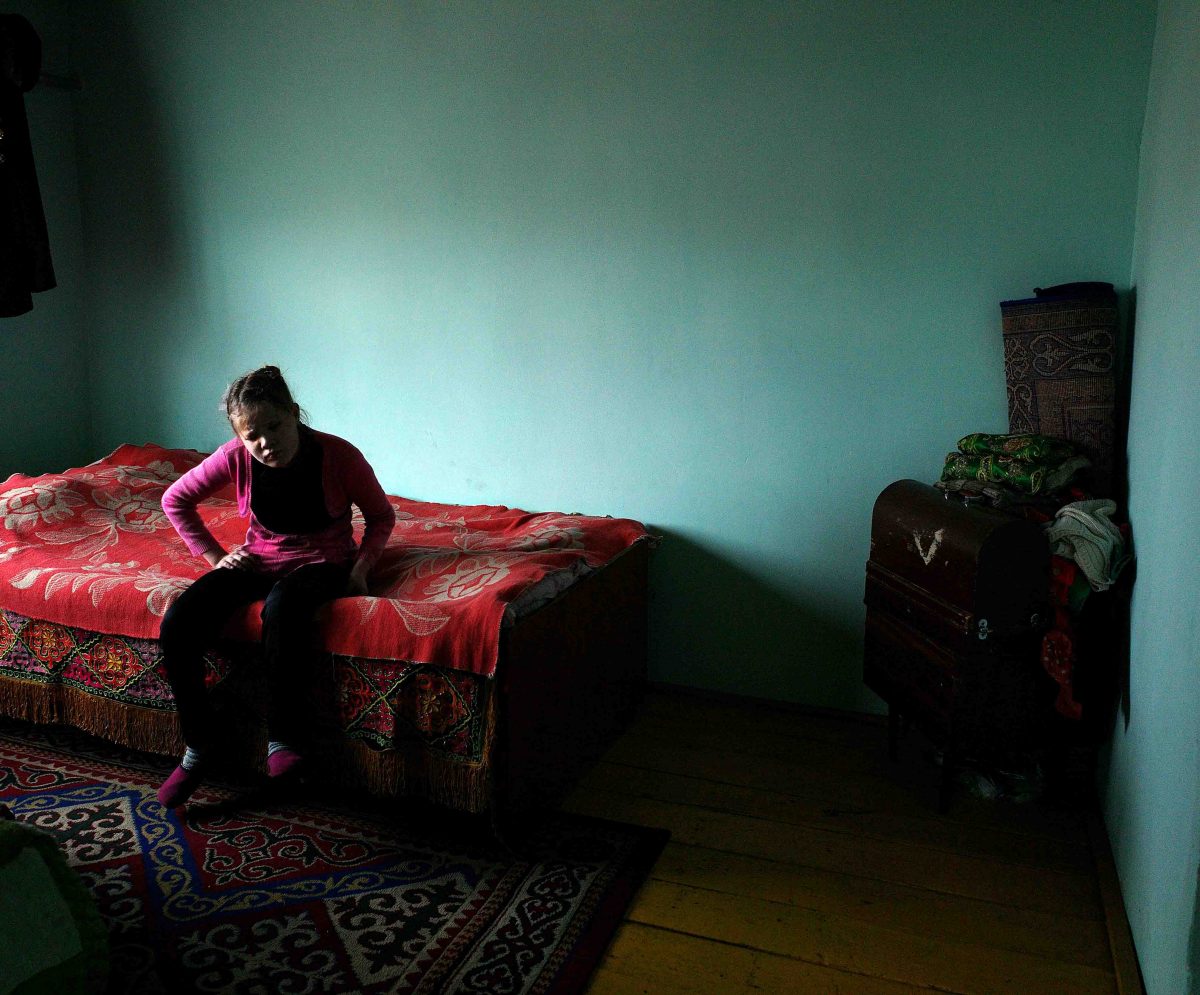
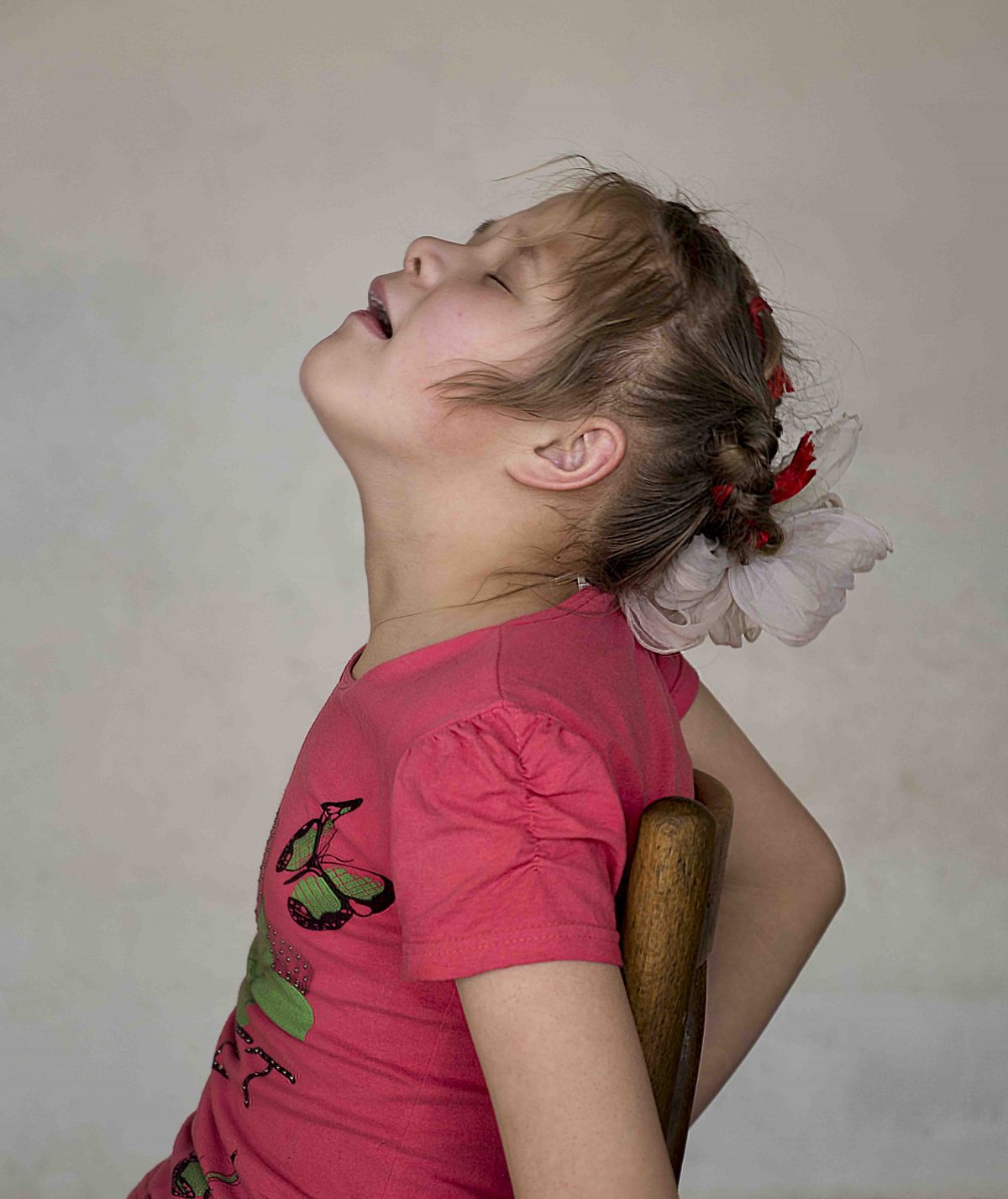
For her portrait I focused on her hair, which was always carefully arranged by her mother, and her body language which was an expression of her anxiety. Anargul, whilst vulnerable and fearful, possessed a simple purity and innocence. She is loved and cared for and I doubt she will ever know institutional life.